West Palm
Beach
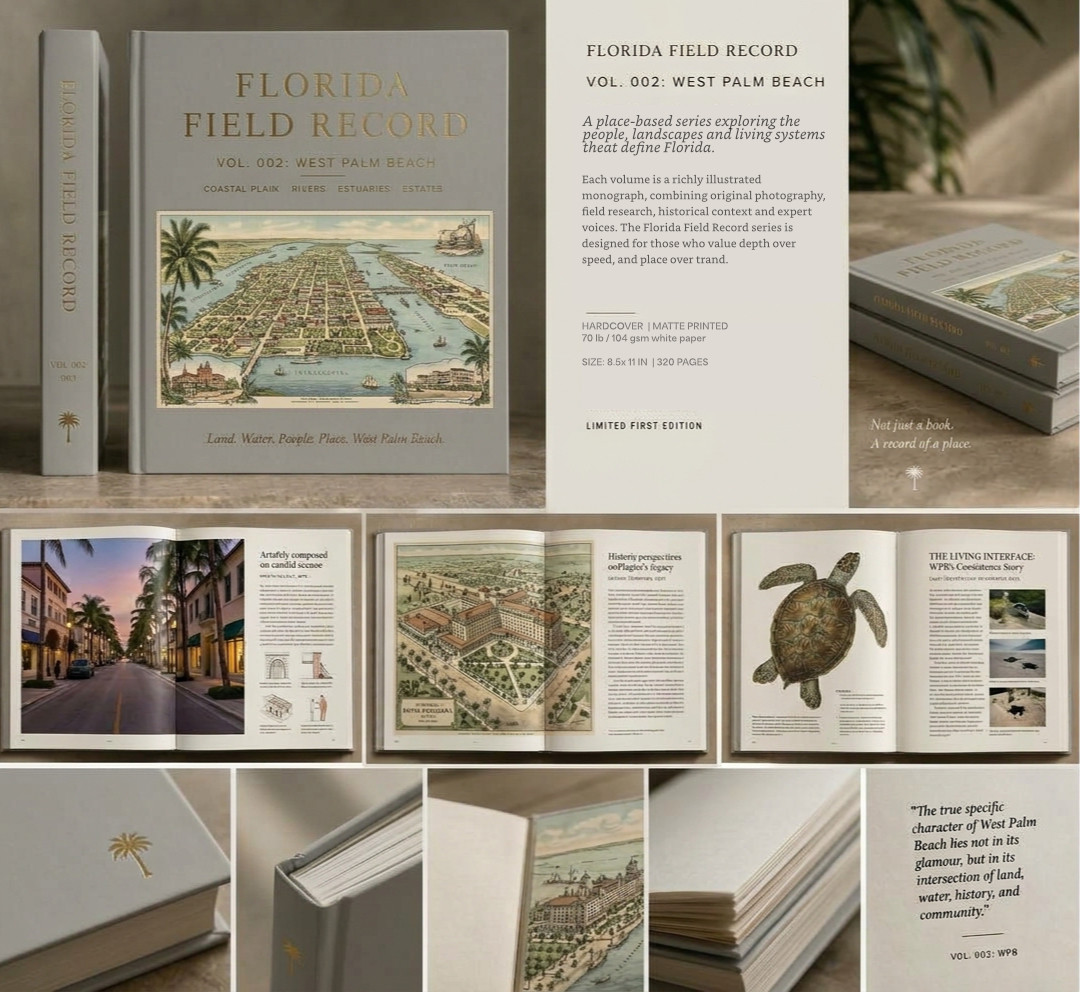
One city.
Many systems.
A city is not simply a collection of buildings. It is a working system of places, people, materials, institutions, trades, histories, infrastructures, businesses, waterways, and accumulated decisions.
The research follows what is physically and historically significant within that field: the people who build and maintain things, the places where work occurs, the institutions that preserve knowledge, the infrastructure that makes the city function, and the histories embedded in its buildings, neighborhoods, waterways, and working environments.
The project is not a directory of businesses and it is not a tourism guide. Organizations may appear because their work, history, knowledge, or physical presence forms part of the evidence through which the city can be understood.
One field.
Two books.
The two volumes share the same geographic field and the same research method. They are not two editions of the same book. Each is intended to be a substantial, independently structured documentary work.
The division is provisional at the research stage. It allows the project to give adequate space to the city's working systems, physical environment, history, culture, memory, and change without forcing unrelated material into a single volume.
Final chapter structures will be determined by the evidence gathered in the field.
Volume I
The Working City
Work, making, marine activity, construction,
restoration, service, infrastructure, architecture,
transportation, waterways, and the physical systems
through which West Palm Beach operates.
Volume II
The Remembered City
History, neighborhoods, institutions, culture,
architecture, collections, oral histories,
preservation, migration, redevelopment, memory,
and the forces reshaping the city.
Follow the
connections.
A working waterfront may lead to vessels, technicians, yards, fabrication, marine systems, labor, infrastructure, tourism, property, and the history of the river.
A historic neighborhood may lead to architecture, migration, Black business history, preservation, redevelopment, property, cultural institutions, and contemporary civic identity.
A fabrication shop may lead to machining, metal, marine work, construction, architecture, supply chains, skilled trades, and workforce development.
The nexus is the structural mechanism of the project: one observed reality becomes a route into the larger system around it.
Working Waterfront
River → vessels → yards → technicians → fabrication → marine systems → labor → infrastructure → tourism → property → history
Historic Neighborhood
Architecture → migration → business → preservation → redevelopment → property → culture → memory
Making
Material → fabrication → machining → construction → architecture → supply chain → skilled labor
Service
Hospitality → architecture → labor → food → design → tourism → seasonal economy → real estate
Go there.
Follow the evidence.
P1Lab enters the field directly. Observation, photography, interviews, archival research, physical investigation, and documentary records are used together.
Photography is one instrument within that process. The objective is not to manufacture attractive images of the city, but to understand and record how the city actually works.
The two books follow the evidence rather than imposing a predetermined promotional narrative.
Two books.
One field record.
The West Palm Beach project will be developed from a working documentary archive that may include original field photography, interviews, research notes, archival material, maps, diagrams, site documentation, captions, source records, and other primary evidence.
The two published books are the edited public form of that research. Together they constitute the West Palm Beach Field Record within the Florida Field Record collection.
Participating organizations may also acquire copies of the finished books for institutional collections, professional offices, clients, relationship development, archives, or long-term corporate history.
Help make
the record.
The scale of the project depends upon access to the field, research time, archival work, field production, editing, design, and physical publication across both books.
Organizations whose work, history, facilities, collections, or operating environments form part of the documented field may participate in making the project possible.
Participation is not advertising. It does not purchase editorial control, guaranteed favorable treatment, authority over subject selection, or control over the conclusions of the research.
The institution helps make the research books possible. It does not buy an advertisement inside them.
Editorial Participation
A participating organization becomes part of the documented field through access, interviews, site research, operational documentation, historical material, or other primary evidence.
Institutional Acquisition
Organizations may acquire an allocation of the finished volume or volumes for institutional use, clients, professional relationships, archives, or permanent collection.
Combined Participation
Research participation and institutional acquisition may be combined where an organization wants both a documented place in the field and a substantial physical allocation of the finished record.
The field is fixed.
The record is developing.
Research begins with the physical city and expands through the relationships encountered in the field.
Volume I and Volume II provide room for different bodies of evidence to receive adequate treatment without forcing the entire city into a single compressed publication.
The provisional distinction between the working city and the remembered city will be tested against the research. Subjects may cross between volumes when the evidence shows that they belong together.
Final chapter structures will emerge from the field.
The city is the subject.
The record follows.
P1Lab is currently developing the two-volume West Palm Beach regional record within Florida Field Record and is speaking with organizations whose work, history, facilities, collections, and knowledge belong within the field.
Inquire About Participation