Sugar
Sugarcane
Cane fields, planting, harvesting, transport, processing, machinery, field organization, and the physical landscape surrounding the sugar system.
Palm Beach County is the field.
An independent documentary study of agriculture as a physical system: land, crops, water, tools, machinery, nurseries, packing, processing, buildings, materials, and the people whose work keeps the system operating.
The geographic boundary is Palm Beach County. The subject is agriculture within that boundary.
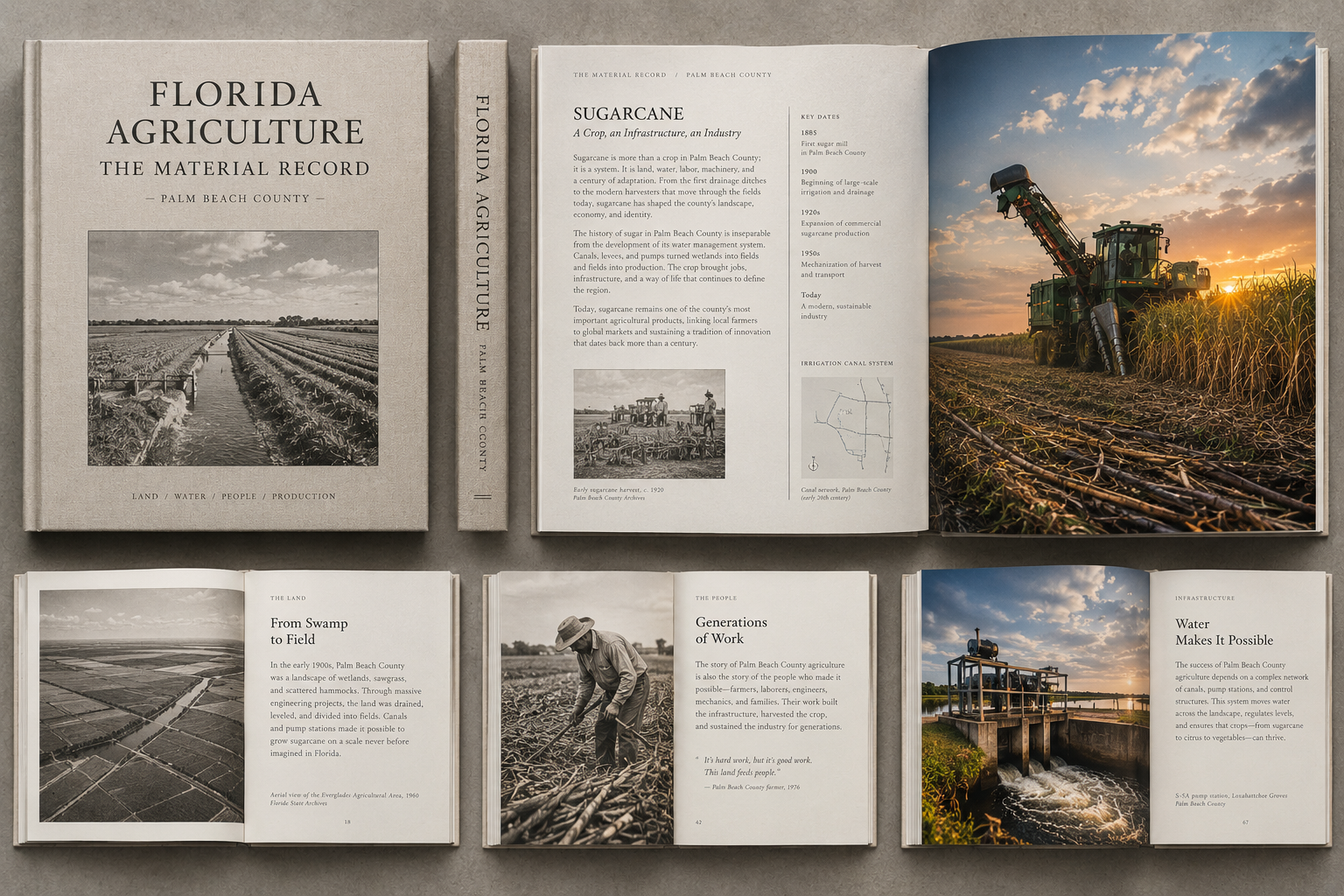
The physical record begins before planting and extends beyond harvest. The book follows the material systems that make agricultural production possible.
A field record can show the soil, water, rows, plants, harvesting, tools, machinery, storage, packing, transportation, processing, buildings, and other physical elements that ordinarily disappear behind the final product.
The objective is not to explain what Palm Beach County agriculture means. It is to establish a visual and documentary record of what is actually there and how the component parts connect.
Farms, nurseries, growers, processors, agricultural suppliers, equipment operators, markets, and other participants may enter the record where they contribute genuine documentary evidence to the field.
The field is geographically bounded, but materially diverse. The final record will follow the agricultural systems that can be observed and documented properly.
Cane fields, planting, harvesting, transport, processing, machinery, field organization, and the physical landscape surrounding the sugar system.
Field production, irrigation, seasonal work, harvesting, equipment, handling, packing, and movement toward market.
Crop production documented through fields, equipment, harvesting, handling, storage, processing, and the material systems surrounding production.
Propagation, containers, growing systems, shade structures, irrigation, plant handling, transport, retail, and landscape plant production.
Fields, soils, drainage, canals, water control, roads, boundaries, cultivated land, and the physical relationship between agriculture and surrounding development.
Hand tools, tractors, implements, pumps, trailers, storage, farm vehicles, machinery, materials, supplies, and equipment in actual use.
The record follows the physical things that make agriculture possible and the transformations those things undergo.
The finished book will be built around things that can be observed, photographed, described, located, and compared.
These categories define the documentary territory without pretending that the final book can contain every agricultural operation in the county.
Fields, soil, muck, sand, drainage, canals, irrigation, water control, field roads, boundaries, and the physical organization of agricultural land.
Hand tools, tractors, implements, harvest equipment, trailers, pumps, machinery, protective equipment, containers, and equipment in actual use.
Sugarcane, vegetables, corn, rice, nursery plants, sod, specialty crops, seeds, propagation, harvested materials, and finished agricultural goods.
Greenhouses, storage spaces, packing areas, farm structures, equipment buildings, processing environments, and other accessible agricultural spaces.
Harvesting, washing, grading, packing, bins, crates, pallets, cold storage, loading, processing, and movement toward market.
Growers, workers, operators, processors, suppliers, equipment specialists, historians, and others able to describe the physical work firsthand.
Participation allows a larger number of agricultural operations and organizations to contribute to the making of the county record.
Farms, nurseries, growers, processors, agricultural suppliers, equipment businesses, and other relevant operations may participate by providing access, firsthand knowledge, photographs, documents, or other useful material and by acquiring finished books.
Agricultural organizations, research bodies, businesses, cultural institutions, and other organizations may support research and production through institutional participation and acquisition.
Palm Beach County is the boundary. Available access, field time, and the quality of the evidence determine the final record.
Visit accessible agricultural environments and observe physical conditions, processes, materials, tools, crops, equipment, and spaces directly.
Photography establishes objects, details, sequences, landscapes, machinery, workspaces, materials, and other visible conditions.
Firsthand explanations from growers, workers, operators, processors, suppliers, historians, and others strengthen the documentary record.
The publication will not claim to represent every agricultural operation in Palm Beach County. It will identify and document the fields that can genuinely be observed.
The project therefore begins with Palm Beach County rather than attempting a statewide survey. The field will be developed through a selected number of accessible agricultural operations and material systems.
Large-scale agriculture, horticulture, nurseries, processing, agricultural equipment, specialty production, and smaller operations may all enter the record where access and documentary value make sustained observation possible.
The historical record includes a direct family connection to Palm Beach County agriculture in the 1920s.
The researcher's wife's grandfather worked with corn in Palm Beach County during the 1920s and sold his crop to Consolidated Sugar.
That family history provides one point of entry into an agricultural field whose physical organization, crops, technologies, businesses, and relationships have changed substantially over the course of a century.
The connection is useful not because it supplies a conclusion, but because it places one documented family experience inside the larger historical record being investigated.
P1Lab is developing the Palm Beach County volume as an independent documentary publication and is looking for agricultural operations, institutions, and knowledgeable participants willing to open the field.
principal.p1.lab@proton.me